
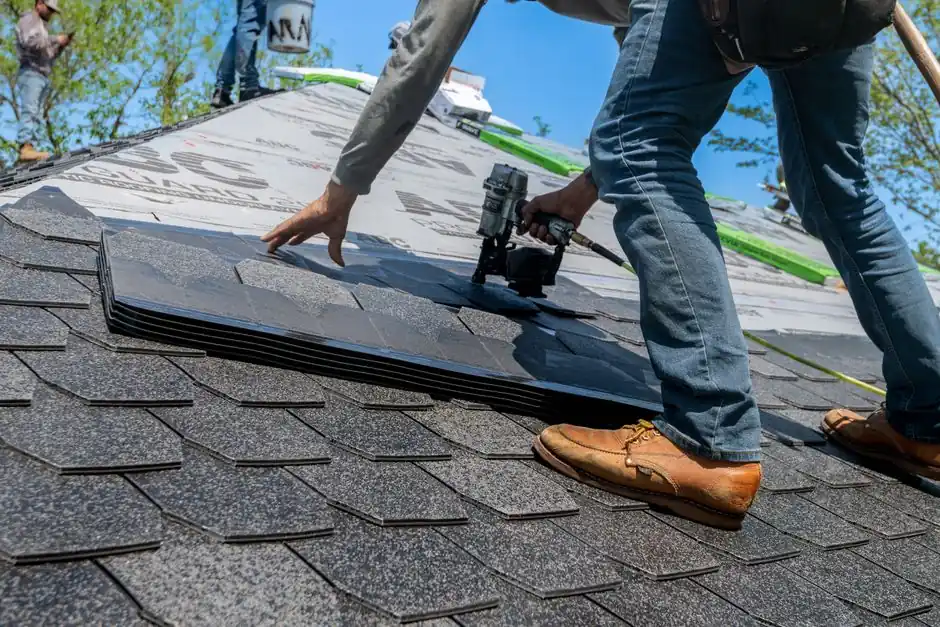
Your asphalt shingle roof is losing granules because the protective mineral surface has worn away - most often from age, hail, wind, or a manufacturing defect. Granules are the coarse, sand-like coating pressed into asphalt shingles to block UV rays and slow water absorption. Once they wash into your gutters in handfuls rather than a light dusting, the shingle underneath is exposed and the clock starts ticking.
Asphalt shingle granule loss is one of the clearest signals of asphalt shingle deterioration, but it does not automatically mean you need a new roof. This guide breaks down what causes it, how much is normal, what Maryland weather does to shingles, and how to tell the difference between cosmetic wear and a roof that is failing.
What granule loss actually means
Granule loss on a roof is the shedding of the mineral surface that protects the asphalt layer underneath. A new architectural shingle carries roughly 200 to 300 pounds of granules per square (100 square feet), and those granules do three jobs: reflect UV light, add fire resistance, and keep water from soaking into the asphalt.
When granules come off, the black asphalt underneath gets exposed. That asphalt then dries, cracks, and curls. Once you can see bare, shiny patches on the shingle surface, the protective layer is gone in that spot and the shingle will age faster there than on the rest of the roof.
If you are comparing shingle types or wondering whether your current roof was installed correctly, our team handles Asphalt Shingle Roofing in Maryland and can tell you what you have and what shape it is in.
Why is my asphalt shingle roof losing granules?
Asphalt shingles lose granules for six main reasons, and most Maryland roofs are dealing with at least two of them at once.
- Age. A standard 3-tab shingle lasts 15 to 20 years; architectural shingles last 25 to 30. After year 15, granule loss accelerates because the asphalt binder has dried out.
- Hail and impact. Hailstones the size of a pea can knock granules loose on contact. You will see dark, bruise-like spots where the granules are gone but the mat is intact.
- Wind. Sustained winds over 50 mph and gusts over 70 mph lift shingle edges and scrub granules off the surface.
- Thermal cycling. Maryland swings from single digits in January to the upper 90s in July. Each expansion and contraction cycle loosens the bond between granule and asphalt.
- Manufacturing defects. Some shingle lots from the 2000s and early 2010s had weak granule adhesion and shed early. If your roof is under 15 years old and losing granules fast, this is worth investigating.
- Foot traffic and pressure washing. Every trip across the roof costs granules. Pressure washing a shingle roof strips them off in sheets.
If you are seeing granules in the gutters of a home in an older neighborhood, it is often the same story we run into on Roofing in Baltimore - 20-plus-year-old three-tab roofs that have simply reached the end of their service life.
Is granule loss normal on asphalt shingles?
Yes, some granule loss is normal on every asphalt shingle roof, especially in the first year after installation. New shingles shed loose surface granules for the first 6 to 12 months as part of the curing process. After that, a healthy roof should lose only a light dusting per season.
The question is not whether your roof loses granules - it is how much and how fast. A few granules in the gutter after a storm is routine. A quarter-inch layer of granules piled at the bottom of your downspout, or bald patches visible from the ground, is not.
Here is a quick way to check without climbing up:
- Look at the ground under your downspouts after a heavy rain. A light scatter of gray grit is normal; a visible pile is not.
- Check your gutter guards or gutter troughs in the fall. If granules make up a noticeable share of the debris, the roof is shedding faster than it should.
- Look at the roof from the street with binoculars. Dark, bare patches on south- and west-facing slopes mean the granules are gone in those areas.
How much granule loss is normal
Industry guidance treats up to about 10 percent granule loss over the first year as normal on a new roof, and roughly 1 to 2 percent per year after that. By the time a roof has lost 30 percent or more of its granule surface, the shingles are near the end of their useful life.
You will not measure this precisely without a lab, but you can estimate it. If half the roof looks gray and half looks dark, you are probably past 30 percent on the gray side. If the whole roof still has an even, sandy texture, you are likely under 10 percent.
Age matters as much as percentage. A 22-year-old architectural shingle roof with moderate granule loss is a candidate for Roof Replacement in Maryland. A 6-year-old roof with the same amount of loss usually points to a defect or storm damage, and that is a different conversation with your insurance company.
Maryland weather and asphalt shingle deterioration
Maryland is hard on asphalt shingles because the state sits in a freeze-thaw belt. Roofs in the Baltimore and Annapolis corridor see roughly 25 to 35 freeze-thaw cycles per winter, and each one works granules loose a little more.
Summer is the other half of the problem. Surface temps on a dark shingle roof hit 150°F to 170°F on a 95°F day. That heat bakes the asphalt binder, and the binder is what holds the granules in place. Add a hailstorm in April or a nor'easter in October, and the roof takes hits from both ends of the thermometer.
Coastal and bay-adjacent areas like Roofing in Annapolis deal with extra humidity and salt air, which speed up oxidation on the granules and metal flashing alike. Inland roofs in Frederick and Carroll counties deal with more hail and more thermal swing. Either way, the shingles age faster here than the manufacturer's national average suggests.
What to watch out for
Granule loss rarely travels alone. When you see it, look for these companions:
- Curling or clawing shingle edges. Curled shingles let water under the course below, which is how leaks start.
- Bare, shiny spots. These are the exposed asphalt mat. They crack within a season or two.
- Granules in the gutter AND dark stains on the roof. That combination usually means the shingle is shedding and algae is feeding on the exposed asphalt.
- Lifted or missing shingles after a storm. If a wind event took shingles, it took granules too.
- Granules in the drip line but a roof that looks fine. Check the attic. Sometimes the granules are the only visible sign of a failing underlayment.
One mistake we see homeowners make is sealing or coating a shedding roof to "lock in" the granules. That does not work. The granules are already gone; a coating just traps moisture against the mat and speeds up rot. Another mistake is pressure washing the roof to clean it - that strips whatever granules are left and voids most shingle warranties.
If you have storm damage on top of granule loss, call us for Storm Damage Roof Repair in Maryland before you file a claim. We document the damage the way adjusters want to see it, which makes the claim go smoother.
When to call a professional
Call a roofer when you can see bare patches from the ground, when granules are piling up at the downspouts, or when the roof is past year 15 and shedding fast. Those are the three signs that separate normal wear from a roof that needs work.
Our team at RoofPros Maryland handles Roof Inspection in Maryland and can tell you in one visit whether you are looking at a repair, a partial replacement, or a full tear-off. We walk the roof, check the attic, and give you a straight answer with pricing in writing before any work starts. If a repair will buy you five more years, we will tell you that instead of pushing a replacement.
For roofs that are actively leaking or have storm damage, we also run Emergency Roofing Services in Maryland so you are not waiting a week with a tarp over your living room.
Frequently Asked Questions
Why is my asphalt shingle roof losing granules?
Age, hail, wind, thermal cycling, and manufacturing defects are the main causes. Most Maryland roofs lose granules because they are past year 15 and the asphalt binder has dried out, letting the mineral surface wash away in rain.
Is granule loss a sign I need a new roof?
Not always. Light, even granule loss on a roof under 15 years old is usually cosmetic or storm-related. Heavy loss with bald patches, curling shingles, or a roof past year 20 usually means replacement is the right call.
How much granule loss is normal?
Up to about 10 percent in the first year is normal on a new roof, then roughly 1 to 2 percent per year. Once a roof has lost 30 percent or more of its granule surface, the shingles are near the end of their service life.
How much does asphalt shingle roof replacement cost in Maryland?
Typical 2026 pricing in Maryland runs $9,500 to $18,000 for an architectural shingle replacement on a 1,800 to 2,500 square foot home, depending on pitch, layers, and decking condition. Steep roofs, multiple layers to tear off, and new plywood push the number higher.
Can I stop granule loss once it starts?
No. Once granules are gone, they do not grow back, and coatings or sealants do not restore them. The only real fix is to repair the affected shingles or replace the roof before the exposed asphalt cracks and leaks.
Get help with Roofing in Maryland
If your gutters are filling with grit and you are not sure whether it is normal wear or a roof on its way out, get a straight answer from a local roofer. We serve homeowners across Maryland and we will tell you what the roof actually needs - repair, replacement, or nothing yet.
Call RoofPros Maryland at (833) 409-1163 to schedule an inspection.