
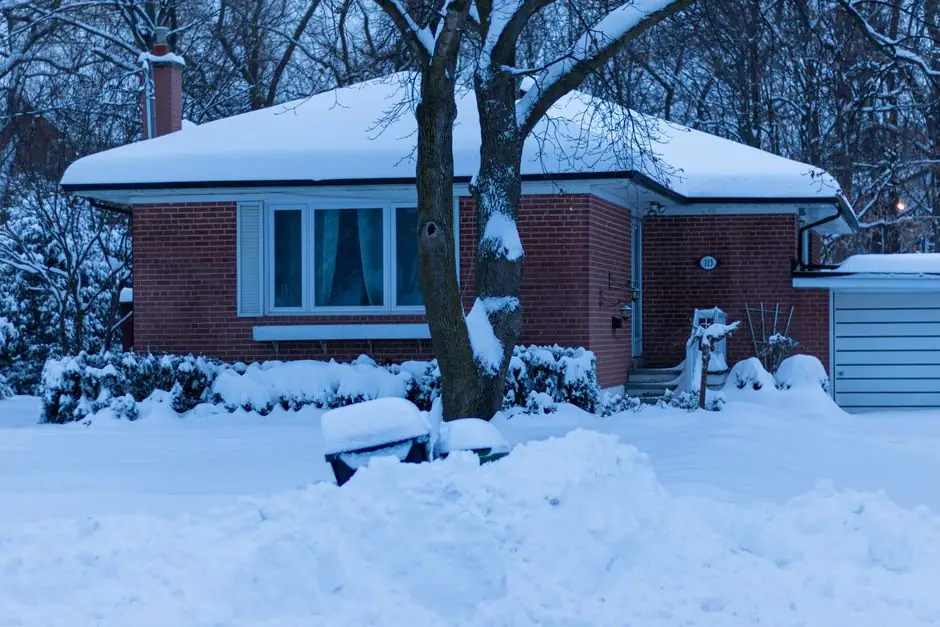
You stop ice dams on your roof during Maryland winters by keeping the roof deck cold - which means sealing warm air out of the attic, insulating to R-49 or better, and ventilating the underside of the roof so snow melts from the sun, not from your furnace. Ice dams form when attic heat melts snow on the upper roof, water runs down to the cold eaves, and refreezes into a dam that backs water up under your shingles.
Every January we get calls from Bowie, Columbia, and the Baltimore beltway about the same thing: a two-inch ridge of ice at the gutter line and a brown stain spreading across the ceiling below. The fix is almost never just the roof. It's the attic. This post walks through why ice dams form here, how to prevent them, what safe removal looks like, and what 2026 pricing runs for Roof Repair in Maryland when the damage is already done.
What causes ice dams on Maryland roofs?
Ice dams on Maryland roofs are caused by a temperature difference between the upper roof deck and the eaves - the top stays above 32°F from escaping attic heat while the bottom edge stays below freezing. That gap is what lets meltwater run down and refreeze.
Maryland winters sit right in the sweet spot for this. We get enough snow - typically 15 to 25 inches a season in the Baltimore and Frederick corridors - but we also get the freeze-thaw cycle. A 40°F afternoon followed by a 22°F night is the worst combination for roofs. Snow melts, water runs, water freezes, repeat.
Three things drive the problem on almost every roof we inspect:
- Air leaks from the house into the attic - recessed lights, bath fans, attic hatches, and top plates. One unsealed can light can push 30 cubic feet per minute of 68°F air into a 20°F attic.
- Thin insulation - most Maryland homes built before 1990 have R-19 to R-30 in the attic. Modern code wants R-49 to R-60 in our climate zone.
- Poor ventilation - blocked soffit vents, missing baffles, or a ridge vent that was never cut in. Without airflow, warm air just sits against the sheathing.
If your home has a low-slope section over a garage or addition, the problem gets worse. Those areas hold snow longer and drain slower, which is why we end up doing so much Flat Roofing in Maryland repair work after a hard February.
How do I stop ice dams on my roof in Maryland?
You stop ice dams on your roof in Maryland by fixing the attic first and the roof second - sealing air leaks, adding insulation to R-49, and clearing every soffit and ridge vent before the first hard freeze in December. Roof-side fixes like heat cable and ice-and-water shield help, but they only manage the symptom.
Here's the order we work in on a typical Maryland home:
- Air-seal the attic floor. Foam the top plates, can lights, bath fan housings, and the attic hatch. This is the single highest-return step and usually takes half a day.
- Add insulation. Blow in cellulose or fiberglass to hit R-49 minimum. In a 1,200 sq ft attic that's typically 12 to 16 inches of blown material.
- Open the ventilation path. Install baffles at every rafter bay so insulation doesn't block the soffit vents. Target 1 sq ft of net free vent area per 150 sq ft of attic floor.
- Check the roof surface. Missing shingles, exposed nails, and worn pipe boots let the backed-up water in fast. A Roof Inspection in Maryland in October or November catches these before snow flies.
- Add ice-and-water shield if you're reroofing. Maryland code requires it along the eaves for good reason - it's the last line of defense when a dam does form.
None of this is exotic. It's the same work we do on almost every roof we touch, and it's why our customers in older neighborhoods like Roofing in Baltimore - where 1920s attics were never designed for modern heat loads - see the biggest drop in ice dam complaints after one season.
Ice dam prevention Maryland: the attic work that actually matters
Ice dam prevention in Maryland comes down to three numbers: attic air temperature under 32°F, insulation at R-49 or higher, and ventilation at 1 sq ft per 150 sq ft of attic floor. Hit those and you've solved 90% of the problem.
We measure attic temperature with an infrared gun on every winter inspection. If the sheathing is reading 40°F when it's 20°F outside, we know exactly where the heat is coming from - and it's almost never where the homeowner thinks.
Seal first, insulate second
Adding insulation over an unsealed attic is like putting a blanket over a leaky window. You slow the heat loss but you don't stop the air movement. Seal the penetrations, then insulate. The order matters.
Don't forget the attic hatch and whole-house fan
An uninsulated attic hatch is a 2-foot by 3-foot hole in your thermal envelope. We build insulated boxes over them for about $150 to $300. A whole-house fan with a flimsy cover is just as bad - cap it or box it.
Ventilation is a system, not a single vent
Soffit vents bring air in, ridge vents push it out. If either side is blocked, the system stalls. We see this constantly on Maryland homes where a previous contractor blew insulation right over the soffit baffles.
Safe ice dam removal in Maryland (and what never to do)
Safe ice dam removal in Maryland means getting the water off the roof without touching the shingles - either by steaming the ice from the top down or by filling a leg of pantyhose with calcium chloride roof melt and laying it vertically across the dam so a channel opens up.
What never to do:
- Never chip at the ice with a hammer, axe, or ice pick. You will punch through shingles and create the leak you're trying to prevent.
- Never use rock salt. It stains siding, kills landscaping, and corrodes gutters and downspouts.
- Never walk a snow-covered roof. A 6/12 pitch with an inch of ice is a fall waiting to happen. We use roof harnesses and standoff ladders for a reason.
- Never pressure-wash ice. It drives water under the shingle edges and does nothing to the dam itself.
The pantyhose-and-calcium-chloride trick works overnight on dams up to about 3 inches thick. Anything bigger, or anything within 4 feet of a valley or chimney, is a job for a crew. Our Emergency Roofing Services in Maryland run steamers that clear a full roofline in 2 to 4 hours without lifting a single shingle.
How much does ice dam removal cost in Maryland in 2026?
Ice dam removal in Maryland runs $400 to $900 for a typical single-family home in 2026, with steam removal at the higher end and small spot treatments at the lower end. Emergency calls after a storm push toward $1,200.
Here's what we're seeing on the invoice side this winter:
- Spot steam removal (one section, under 20 ft): $400-$550
- Full roofline steam removal: $700-$900
- Emergency same-day service: $900-$1,200
- Interior water damage repair (drywall, paint, trim): $600-$2,500 depending on how far the water traveled
- Attic air-sealing and insulation upgrade: $1,800-$4,200 - this is the permanent fix, not the band-aid
Compare that to a full Roof Replacement in Maryland, which runs $9,000 to $18,000 for an average 2,000 sq ft roof. One winter of ignored ice dams can rot the sheathing and decking enough to force that replacement years before it was due.
Can ice dams damage my roof?
Yes - ice dams damage roofs in three ways: they pry up shingle edges, they force water under the underlayment and into the decking, and they back water up into the attic and down interior walls. The visible stain on your ceiling is usually the last symptom, not the first.
What we find when we open up a roof after a bad ice dam winter:
- Lifted and cracked shingle tabs along the bottom three courses
- Water-stained sheathing and, in bad cases, soft spots from rot
- Rusted or loosened drip edge and gutter hangers pulled away from the fascia
- Wet insulation in the attic, which is worse than useless - it drops to R-5 or less once it's soaked
- Mold on the underside of the roof deck within 48 to 72 hours of a leak
If you've had a dam this season, get the roof looked at before spring. Small Roof Leak Repair in Maryland now is a fraction of the cost of a deck rebuild later.
Common mistakes Maryland homeowners make with ice dams
The most common mistake is treating the ice dam as a roof problem when it's an attic problem - you can remove the ice every week and it will come back every week until the heat source is fixed.
Other ones we see every winter:
- Turning the heat down to "starve" the attic. It doesn't work. The attic is fed by air leaks, not by the thermostat setting.
- Hiring a handyman with a hammer. We've repaired a lot of shingles that were chipped off by well-meaning ice removal.
- Ignoring the gutters. A gutter packed with fall leaves gives meltwater nowhere to go, so it backs up under the shingles even without a full dam.
- Waiting until January. The right time to air-seal and insulate is October and November, before the first freeze. Once the snow is on the roof, your options shrink.
- Assuming a new roof solves it. A new roof with a warm attic will grow ice dams just as fast as the old one did.
When to call a professional
Call a professional when the ice dam is thicker than 3 inches, when water is already showing up inside, or when you can't safely reach the roof with a ladder and standoff. Those are the three lines we draw.
At RoofPros Maryland, we handle the whole chain - steam removal, attic air-sealing, insulation, and any shingle or sheathing repair the dam left behind. We work across the state, from Roofing in Annapolis waterfront homes that get hit hard by bay-effect snow to inland properties along the fall line. If you're not sure whether your attic is the problem, we'll bring the infrared camera and show you exactly where the heat is leaking.
Frequently Asked Questions
How do I stop ice dams on my roof in Maryland?
Seal air leaks in the attic floor, add insulation to R-49, and clear soffit and ridge vents before December. That keeps the roof deck cold so snow melts from the sun, not from your house. Roof-side fixes like heat cable only manage the symptom.
What causes ice dams on roofs in Maryland?
Warm attic air melts snow on the upper roof, water runs to the cold eaves, and refreezes into a dam. Maryland's 15-25 inch snow seasons plus frequent freeze-thaw cycles make the state a prime ice dam climate, especially on homes with under-insulated attics.
How much does ice dam removal cost in Maryland?
Typical 2026 pricing runs $400 to $900 for a single-family home, with emergency same-day service reaching $1,200. Steam removal costs more than spot treatment but is far safer for your shingles than chipping or hacking at the ice.
Can ice dams damage my roof?
Yes. Ice dams lift shingle edges, force water under the underlayment, rot sheathing, and back water into the attic and interior walls. Mold can start on the underside of the deck within 48 to 72 hours of a leak, so get the roof inspected promptly.
Does a new roof prevent ice dams?
No. A new roof with a warm attic will grow ice dams just as fast as the old one. Ice-and-water shield along the eaves helps contain the damage, but the permanent fix is air-sealing and insulating the attic to R-49 or higher.
Get help with Roofing in Maryland
If you've got ice stacked at the gutter line or a stain spreading across a ceiling, we can be there this week. RoofPros Maryland handles ice dam removal, attic air-sealing, and every repair the dam leaves behind.
Call (833) 409-1163 and we'll schedule a same-week visit - no diagnostic fee on the first trip.